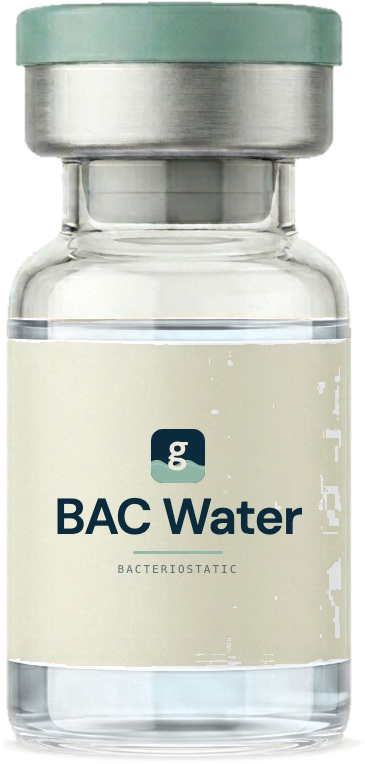
Bacteriostatic Water
Bacteriostatic water is sterile water with 0.9% benzyl alcohol as a preservative, used as the reconstitution solvent for lyophilized peptide vials; the benzyl alcohol allows safe multi-use of a vial for up to 28 days refrigerated at 2-8°C.
Best for
Anyone reconstituting peptide vials. Required for every lyophilized peptide protocol
What to expect
Not applicable. Diluent, not a therapeutic agent
Pairs with
Required for every peptide that ships lyophilized
Draw 1-3mL with an 18g reconstitution needle and inject slowly down the side wall of the peptide vial. Swirl gently. Never shake
Bacteriostatic water for injection is sterile water containing 0.9% benzyl alcohol as a preservative. The benzyl alcohol prevents microbial growth in the reconstituted vial, allowing the same vial to be used safely over a 28-day window at refrigeration temperature (2-8°C).
This distinguishes it from plain Sterile Water for Injection (USP), which has no preservative and must be used within a single sitting once the vial is opened. Compounded under USP <797> standards for sterile compounding, the same standard that governs every injectable medication.
Not appropriate for newborns (benzyl alcohol crosses the immature blood-brain barrier in concerning amounts), and not used in IV contexts that require preservative-free formulations. For subcutaneous peptide reconstitution at typical 1-3mL volumes, BAC water is the standard diluent across both clinical and research settings.
Each 10mL vial supports reconstitution of roughly 3-10 peptide vials depending on dilution protocol.
References
No references are indexed for this entry yet.
Log every dose, count every vial, and verify your batches — free in the goodtides app.
This page is educational reference material about compounds studied in research settings. It is not medical advice, and nothing here is a recommendation to buy, possess, or use any compound. Research findings described are from published literature; individual compounds may not be approved for human use. Talk to a licensed clinician about anything that affects your health.