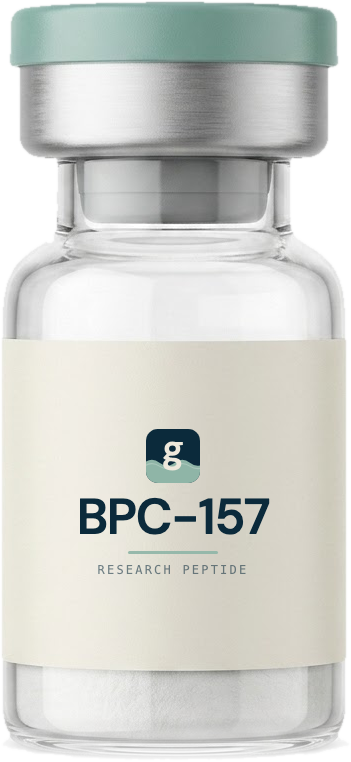
BPC-157
BPC-157 (Body Protective Compound-157) is a synthetic 15-amino-acid peptide studied as a cytoprotective, pro-regenerative agent for soft-tissue and gut healing; research protocols typically start around 100 mcg daily subcutaneously, titrating toward roughly 1 mg/day.
Best for
It has been studied primarily in animal and laboratory models for soft-tissue repair (muscle, tendon, ligament), gastrointestinal mucosal protection and healing, and modulation of inflammation and angiogenesis during injury recovery.
What to expect
Across animal studies, measurable effects on tissue healing and angiogenesis have generally been reported over days to a few weeks of repeated administration rather than acutely, with timing varying by model and injury type.
Pairs with
In informal recovery research contexts it is frequently discussed alongside TB-500 (thymosin beta-4 fragment) for soft-tissue work and growth-hormone-axis peptides such as CJC-1295 or ipamorelin, though controlled human data on any such combination are lacking.
In research settings it is most often administered by subcutaneous or intraperitoneal injection on a once- or twice-daily schedule, with some studies using oral or topical routes; reported experimental doses are typically expressed per kilogram of body weight in animals, and no established human dosing standard exists.
These figures are research-community reference points; no controlled human dose has been established.
- How often
- Daily
- Route
- Subcutaneous
- Vial & water
- 10 mg vial in 3 mL = 3.33 mg/mL · 100 mcg = 3 units on a U-100 syringe
- Cycle
- Run until the injury/issue resolves; no fixed off-cycle needed.
The same numbers the goodtides app and the Dose Calc use — a research reference, not a prescription. Responses are individual; research protocols start at the low end.
BPC-157 (Body Protective Compound-157) is a synthetic, stable pentadecapeptide — a 15-amino-acid sequence derived from a partial protein fragment originally isolated from human gastric juice.
BPC-157 is not FDA-approved for any use, is not a recognized dietary ingredient, and is handled as an experimental research compound.
Research has characterized it as a cytoprotective and pro-regenerative agent rather than a receptor agonist with a single defined target; studies attribute its effects to upregulation of vascular endothelial growth factor (VEGF) and modulation of the VEGFR2-Akt-eNOS nitric oxide pathway, which appears to promote angiogenesis (new blood vessel formation) during tissue repair. Additional research suggests it can increase growth hormone receptor expression in tendon fibroblasts (via JAK-STAT signaling) and influence fibroblast survival and migration.
The large majority of published work comes from rodent and in vitro models of muscle, tendon, ligament, bone, and gastrointestinal injury; robust human clinical trial data are limited.
- Half-life
- < 30 min plasma
- Peak
- ~30-90 min post-SC
- Absorption
- SC well-absorbed; oral form has lower bioavailability but local GI effect
- Bioavailability
- SC ~50-70%; oral ~10-15%
References2
Log every dose, count every vial, and verify your batches — free in the goodtides app.
This page is educational reference material about compounds studied in research settings. It is not medical advice, and nothing here is a recommendation to buy, possess, or use any compound. Research findings described are from published literature; individual compounds may not be approved for human use. Talk to a licensed clinician about anything that affects your health.