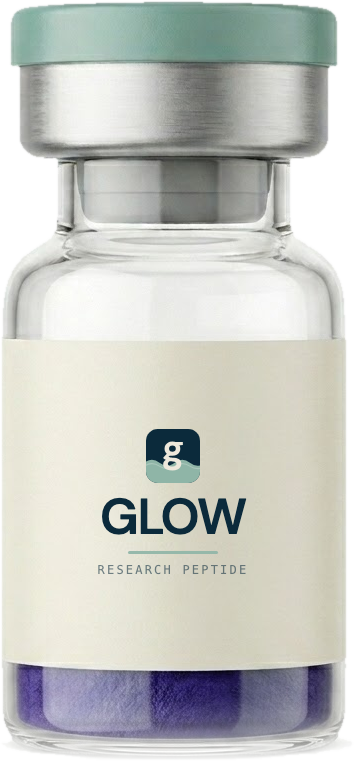
GLOW
GLOW is a multi-peptide research blend pairing a high proportion of GHK-Cu with BPC-157 and TB-500, studied for skin, hair, nail, and tissue-repair support; research protocols typically start near 10 units and build to about 30 units (~5 mg GHK-Cu) daily subcutaneously.
Best for
It has been studied in research settings for skin, hair, and nail support and for general tissue repair, reflecting GHK-Cu's collagen- and follicle-related research alongside BPC-157 and TB-500's preclinical tissue-repair literature.
What to expect
Research on the individual components describes gradual changes, with skin- and collagen-related GHK-Cu effects characterized over several weeks of repeated exposure and repair endpoints for BPC-157 and TB-500 likewise reported over multi-week study periods.
Pairs with
Within this product the peptides are already combined, and in broader research practice GHK-Cu, BPC-157, and TB-500 are commonly grouped with recovery- and regeneration-oriented compounds rather than added to further stimulatory agents.
In research contexts blends of this type are typically administered as a daily subcutaneous injection, and the ladder is read in mg per component: 10 units for maintenance (about 1.7 mg GHK-Cu and 0.33 mg each of BPC-157 and TB-500), 20 units for recovery (3.3 mg GHK-Cu, 0.67 mg each) and 30 units for healing (5 mg GHK-Cu, 1 mg each) — copper's 5 mg daily research ceiling caps this blend before BPC-157 or TB-500 reach their 2 mg.
- How often
- Daily
- Route
- Subcutaneous
- Vial & water
- 70 mg in 3 mL · 10 units ≈ 1.67 mg GHK-Cu + 0.33 mg BPC-157 + 0.33 mg TB-500
- Cycle
- Continuous
The same numbers the goodtides app and the Dose Calc use — a research reference, not a prescription. Responses are individual; research protocols start at the low end.
GLOW is a multi-peptide research blend; its formulation pairs a high proportion of GHK-Cu (glycyl-L-histidyl-L-lysine bound to copper(II)) with the repair peptides BPC-157 and TB-500.
GHK-Cu is a naturally occurring copper-binding tripeptide present in human plasma that declines with age; in cell and animal research it has been characterized as a modulator of skin remodeling, where it has been studied for stimulating fibroblast synthesis of collagen, elastin, and glycosaminoglycans and for regulating matrix metalloproteinases and their inhibitors (TIMP-1, TIMP-2), alongside reported anti-inflammatory and antioxidant gene-level effects. BPC-157, a synthetic 15-amino-acid fragment derived from a gastric protein, has been studied preclinically for tendon, muscle, and ligament repair via angiogenic and nitric-oxide-pathway mechanisms, while TB-500 (a synthetic thymosin beta-4 fragment) has been examined for cell migration and tissue regeneration.
None of these peptides is FDA-approved; each is used as a research compound, and human clinical evidence remains limited.
References3
- Sikiric P et al. Stable gastric pentadecapeptide BPC 157: novel therapy in gastrointestinal tract (Curr Pharm Des)
- Goldstein AL et al. Thymosin beta4: actin-sequestering protein moonlights to repair injured tissues (Trends Mol Med)
- Pickart L. The human tri-peptide GHK and tissue remodeling (J Biomater Sci Polym Ed)
Log every dose, count every vial, and verify your batches — free in the goodtides app.
This page is educational reference material about compounds studied in research settings. It is not medical advice, and nothing here is a recommendation to buy, possess, or use any compound. Research findings described are from published literature; individual compounds may not be approved for human use. Talk to a licensed clinician about anything that affects your health.