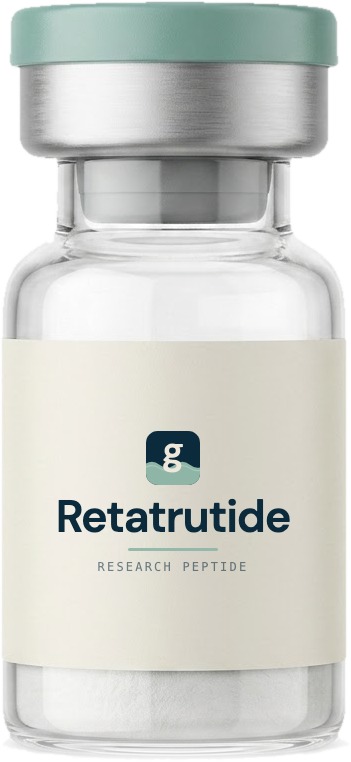
Retatrutide
Retatrutide is a next-generation triple agonist of the GLP-1, GIP, and glucagon receptors developed for weight loss; research protocols typically start at 1 mg subcutaneously once weekly, titrating up to a 12 mg ceiling only if weight loss stalls.
Best for
Adults with significant metabolic or weight-management goals; research-context use under physician supervision is strongly indicated due to potent multi-receptor activity
What to expect
Initial appetite-suppression and weight changes typically within 2-4 weeks; full metabolic effects develop over 24-48 weeks of consistent use
Pairs with
Generally used standalone given the breadth of its receptor activity
Subcutaneous injection once weekly. Research protocols step up in dose: the reference ladder starts at 1 mg and climbs 2 → 4 → 8 → 12 mg roughly every four weeks, moving up only once the response has plateaued, with 12 mg the highest dose used in the trials.
- How often
- Weekly
- When
- Morning
- Route
- Subcutaneous
- Vial & water
- 10 mg vial in 1 mL = 10 mg/mL · 1 mg = 10 units on a U-100 syringe
- Cycle
- Start 1 mg, step up the ladder 1 → 2 → 4 → 8 → 12 mg ~every 4 weeks — ONLY if your response has plateaued.
The same numbers the goodtides app and the Dose Calc use — a research reference, not a prescription. Responses are individual; research protocols start at the low end.
No approved brand anywhere. Retatrutide is still in clinical trials — it has never been reviewed, approved, or sold as a finished medicine at any dose. Trial figures are research reference points, not a label.
Retatrutide is a next-generation triple-receptor agonist developed by Eli Lilly, simultaneously activating GLP-1 (glucagon-like peptide-1), GIP (glucose-dependent insulinotropic polypeptide), and glucagon receptors.
This three-way pharmacology distinguishes it from earlier obesity therapeutics: GLP-1 monotherapy (semaglutide / Ozempic / Wegovy) drives 12-15% mean weight loss in trials, GLP-1+GIP combinations (tirzepatide / Mounjaro / Zepbound) drive 20-22%, and Retatrutide's Phase 2 trials demonstrated 24% mean weight loss at 48 weeks. That's the largest weight-loss magnitude reported for any pharmaceutical agent to date.
The glucagon-receptor agonism is the novel addition: it increases energy expenditure and lipolysis (fat breakdown), complementing the appetite-suppression effects of GLP-1/GIP. Side-effect profile mirrors the GLP-1 class (nausea, gastrointestinal disruption particularly during dose escalation, occasional injection-site reactions) with the addition of mild liver-enzyme elevations attributed to glucagon signaling.
Retatrutide is currently in Phase 3 trials (TRIUMPH-1, TRIUMPH-2, TRIUMPH-OUTCOMES) targeting obesity, type 2 diabetes, and cardiovascular-outcome endpoints. Not yet FDA-approved as of this writing; expected approval timeline 2026-2027.
Used in research contexts under physician supervision, particularly for severe obesity or metabolic syndrome unresponsive to first-line GLP-1 therapy.
- Half-life
- ~6 days
- Peak
- ~24-72 hr post-SC
- Absorption
- SC; fatty-acid sidechain enables once-weekly dosing
- Bioavailability
- SC near complete (>90%)
References2
Log every dose, count every vial, and verify your batches — free in the goodtides app.
This page is educational reference material about compounds studied in research settings. It is not medical advice, and nothing here is a recommendation to buy, possess, or use any compound. Research findings described are from published literature; individual compounds may not be approved for human use. Talk to a licensed clinician about anything that affects your health.