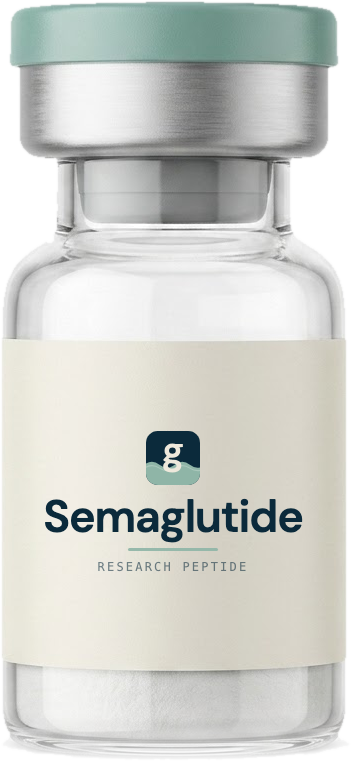
Semaglutide
Semaglutide is a long-acting GLP-1 receptor agonist studied for glycemic control and chronic weight management; research protocols typically start at 0.25 mg subcutaneously weekly, titrating toward a 2.4 mg maintenance dose.
Best for
It has been studied for glycemic control in type 2 diabetes, chronic weight management in adults with obesity or overweight with weight-related conditions, and reduction of major cardiovascular events in adults with established cardiovascular disease and obesity or overweight.
What to expect
Research reports steady-state exposure after approximately 4 to 5 weeks of once-weekly dosing, with appetite and metabolic effects emerging over weeks and weight-loss outcomes accruing progressively across trial periods of up to 68 weeks.
Pairs with
In clinical research it has most often been studied alongside lifestyle intervention (reduced-calorie diet and increased physical activity), and in diabetes settings in combination with agents such as metformin, insulin, or SGLT2 inhibitors.
In the approved injectable form, research and labeling describe once-weekly subcutaneous administration with gradual dose escalation over several weeks (for weight-management studies, titrating toward a 2.4 mg maintenance dose) to limit gastrointestinal effects, while an oral formulation has been studied as a once-daily tablet.
- How often
- Weekly
- When
- Morning
- Route
- Subcutaneous
- Vial & water
- 10 mg vial in 3 mL = 3.33 mg/mL · 0.25 mg = 7.5 units on a U-100 syringe
- Cycle
- 0.25 → 0.5 → 1.0 → 1.7 → 2.4 mg, escalate every 4 weeks
The same numbers the goodtides app and the Dose Calc use — a research reference, not a prescription. Responses are individual; research protocols start at the low end.
- Ozempic®injection · weeklytype 2 diabetes
- Wegovy®injection · weeklyweight management
- Rybelsus®ORAL tablet · dailytype 2 diabetesOral doses use completely different milligram numbers that do not apply to an injection.
Brand names identify the molecule, not the dose. Each brand is a finished prescription product with its own fixed dose steps and its own route — a brand’s milligrams never transfer to a vial.
Ozempic and Wegovy are the same molecule approved to different maximums for different uses. Neither maximum is a target for a vial.
Ozempic, Wegovy and Rybelsus are registered trademarks of Novo Nordisk A/S. goodtides is not affiliated with, endorsed by, or licensed by Novo Nordisk. We sell research-grade semaglutide. We do not sell Ozempic, Wegovy or Rybelsus.
Semaglutide is a synthetic, long-acting analog of the human incretin hormone glucagon-like peptide-1 (GLP-1), sharing roughly 94% structural homology with native GLP-1; backbone modifications and a fatty-acid (C18 diacid) side chain confer albumin binding and resistance to DPP-4 degradation, extending its half-life to permit once-weekly dosing.
It acts as a GLP-1 receptor agonist, binding receptors expressed in the pancreas, gastrointestinal tract, and central nervous system. Research has characterized glucose-dependent enhancement of insulin secretion, suppression of glucagon, slowing of gastric emptying, and reduced appetite and energy intake via central satiety pathways.
It is FDA-approved (marketed as Ozempic and Rybelsus for type 2 diabetes, and Wegovy for chronic weight management and, in established cardiovascular disease with obesity/overweight, cardiovascular risk reduction); the injectable forms are extensively studied in large randomized trials.
- Half-life
- ~7 days
- Peak
- 1-3 days post-SC
- Absorption
- SC fatty-acid acylation → once-weekly
- Bioavailability
- SC ~89%; oral ~1%
References4
- Wilding JPH et al. Once-Weekly Semaglutide in Adults with Overweight or Obesity - STEP 1 (N Engl J Med)
- DailyMed - WEGOVY (semaglutide) FDA prescribing information
- Blundell J et al. Effects of once-weekly semaglutide on appetite, energy intake, control of eating, food preference and body weight in subjects with obesity (Diabetes Obes Metab)
- Pharmacokinetics and Clinical Implications of Semaglutide: A New Glucagon-Like Peptide (GLP)-1 Receptor Agonist (Clin Pharmacokinet)
Log every dose, count every vial, and verify your batches — free in the goodtides app.
This page is educational reference material about compounds studied in research settings. It is not medical advice, and nothing here is a recommendation to buy, possess, or use any compound. Research findings described are from published literature; individual compounds may not be approved for human use. Talk to a licensed clinician about anything that affects your health.