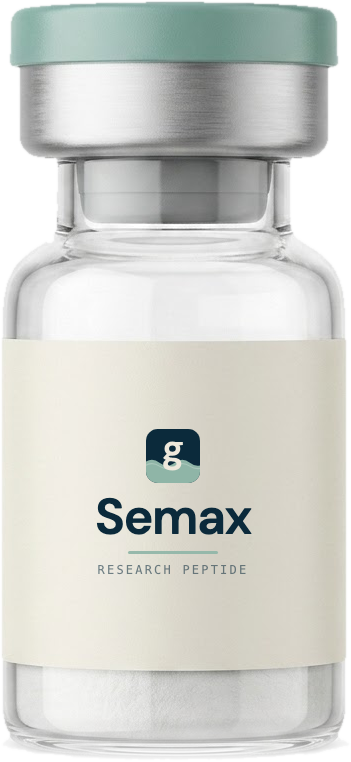
Semax
Semax is a synthetic heptapeptide derived from an ACTH(4-10) fragment, studied for cognitive enhancement, focus, and neuroprotection; research protocols typically use 250 mcg subcutaneously once daily in the morning (up to 1000 mcg).
Best for
Adults with cognitive-performance concerns, those recovering from cognitive insults (concussion, stroke, prolonged stress), or researchers exploring neuroprotection
What to expect
Cognitive and mood effects often within the first 1-2 weeks of consistent use
Pairs with
Frequently paired with Selank for combined cognitive-anxiolytic protocols
Subcutaneous injection, typically 1× daily in the morning (some protocols split morning + afternoon). Common research dose 0.3-1.0 mg per administration.
- How often
- Daily
- When
- Morning
- Route
- Subcutaneous
- Vial & water
- 10 mg vial in 3 mL = 3.33 mg/mL · 250 mcg = 7.5 units on a U-100 syringe
- Cycle
- Often cycled (e.g. 10–20 days on, short break) but can run continuously — adjust to goals.
The same numbers the goodtides app and the Dose Calc use — a research reference, not a prescription. Responses are individual; research protocols start at the low end.
Semax is a synthetic heptapeptide derived from the structure of ACTH (Adrenocorticotropic Hormone). Specifically, the fragment ACTH(4-10) with N-acetyl modifications that confer unusual stability and oral / intranasal bioavailability for a peptide its size.
Not FDA-approved in the United States; available through compounding pharmacies for research use under physician supervision.
Developed in Russia in the 1980s at the Institute of Molecular Genetics, it has been used clinically in Russia for over 30 years, primarily for stroke recovery, where it's approved as a prescription medication. Research suggests Semax acts through multiple neurotrophic mechanisms: upregulation of BDNF (Brain-Derived Neurotrophic Factor) and NGF (Nerve Growth Factor), modulation of dopamine and serotonin systems, neuroprotective effects against ischemic injury (the original clinical use case), and enhancement of synaptic plasticity in hippocampal and prefrontal-cortex circuits.
Russian neurological clinics report use for stroke rehabilitation, traumatic brain injury recovery, cognitive impairment in older adults, ADHD-spectrum concerns, and even optic-nerve disorders. Many research protocols favor intranasal administration twice daily given the rapid blood-brain barrier penetration and short half-life.
The compound is being investigated in newer trials for conditions ranging from age-related cognitive decline to glaucoma.
- Half-life
- ~30 min
- Peak
- ~15-30 min post-SC
- Absorption
- SC well-absorbed; ACTH(4-10) analog
- Bioavailability
- SC ~80%
References3
- Gusev EI et al. The efficacy of semax in the treatment of patients at different stages of ischemic stroke (Zh Nevrol Psikhiatr Im S S Korsakova)
- Eremin KO et al. Semax, an ACTH(4-10) analogue with nootropic properties, activates dopaminergic and serotoninergic brain systems in rodents (Neurochem Res) (rodent model)
- The effect of semax and its C-end peptide PGP on expression of the neurotrophins and their receptors in the rat brain during incomplete global ischemia (Mol Biol) (rat model)
Log every dose, count every vial, and verify your batches — free in the goodtides app.
This page is educational reference material about compounds studied in research settings. It is not medical advice, and nothing here is a recommendation to buy, possess, or use any compound. Research findings described are from published literature; individual compounds may not be approved for human use. Talk to a licensed clinician about anything that affects your health.