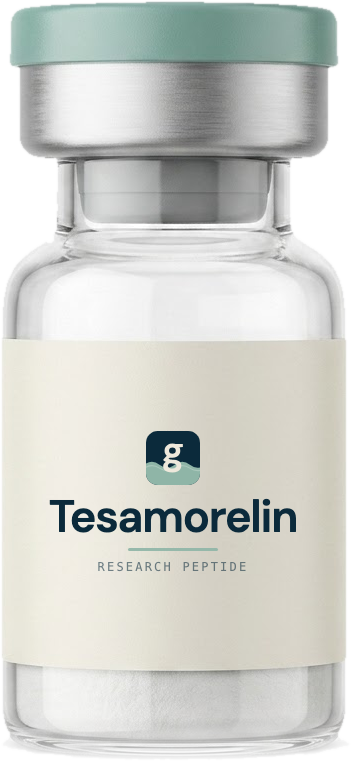
Tesamorelin
Tesamorelin is a synthetic, stabilized GHRH analog FDA-approved for HIV-associated lipodystrophy and studied for visceral-fat reduction; research protocols typically use 1 mg subcutaneously nightly while fasted to align with the overnight GH pulse.
Best for
Adults with visceral-fat concerns, particularly those with HIV-associated lipodystrophy (the FDA-approved indication) or research interest in deep abdominal-fat reduction
What to expect
Visceral-fat changes typically detectable on imaging studies over 12-24 weeks of consistent use
Pairs with
Used standalone or paired with general GHRH-supportive peptides like Sermorelin or CJC-1295 for amplified GH-pulse effects
Subcutaneous injection nightly, before bed and fasted, to align with the natural overnight GH pulse. The reference ladder starts at 1 mg and runs to 2 mg/day, the dose used in the pivotal trials.
- How often
- Daily
- When
- Bedtime, fasted
- Route
- Subcutaneous
- Vial & water
- 10 mg vial in 1 mL = 10 mg/mL · 1 mg = 10 units on a U-100 syringe
- Cycle
- Continuous
The same numbers the goodtides app and the Dose Calc use — a research reference, not a prescription. Responses are individual; research protocols start at the low end.
- Egrifta SV®injection · dailyexcess abdominal fat in HIV-associated lipodystrophy
- Egrifta WR®injection · weeklyexcess abdominal fat in HIV-associated lipodystrophy
Brand names identify the molecule, not the dose. Each brand is a finished prescription product with its own fixed dose steps and its own route — a brand’s milligrams never transfer to a vial.
The two are explicitly not substitutable and reconstitute differently. The 2 mg/day figure common in research protocols comes from the original Egrifta, which is discontinued.
Egrifta SV and Egrifta WR are registered trademarks of Theratechnologies Inc.. goodtides is not affiliated with, endorsed by, or licensed by Theratechnologies. We sell research-grade tesamorelin. We do not sell Egrifta SV or Egrifta WR.
Tesamorelin is a synthetic analog of growth hormone-releasing hormone (GHRH). Specifically, a 44-amino-acid peptide with a stabilizing N-terminal modification (trans-3-hexenoic acid) that extends its half-life well beyond endogenous GHRH's ~7-minute window.
FDA-approved as Egrifta in 2010 for HIV-associated lipodystrophy (HALS), the abnormal fat redistribution that affected patients on early antiretroviral therapies and remains a clinical concern in long-term HIV management. Tesamorelin acts on the pituitary to stimulate physiological growth hormone release through the natural GHRH receptor, which in turn drives lipolysis preferentially in visceral adipose tissue.
Pivotal clinical trials demonstrated 15-20% reductions in visceral fat area over 26 weeks in HIV-lipodystrophy patients, without significant changes in subcutaneous fat or muscle mass. The visceral-fat specificity is the distinctive feature: unlike total caloric restriction or general weight-loss interventions, Tesamorelin appears to selectively target the metabolically-active deep abdominal fat depot most strongly associated with insulin resistance, hepatic steatosis (fatty liver), and cardiovascular risk.
Research interest has expanded to non-HIV populations with central obesity, NAFLD (non-alcoholic fatty liver disease), metabolic syndrome, and even cognitive effects observed in HIV-cohort studies. The compound is generally well-tolerated; main side effects relate to GH-pathway activation (mild joint stiffness, modestly elevated insulin / fasting glucose during use).
- Half-life
- ~8-26 min plasma (formulation-dependent)
- Peak
- Tmax ~0.15 h (~9 min) post-SC
- Absorption
- Subcutaneous, rapid
- Bioavailability
- < 4% subcutaneous
Log every dose, count every vial, and verify your batches — free in the goodtides app.
This page is educational reference material about compounds studied in research settings. It is not medical advice, and nothing here is a recommendation to buy, possess, or use any compound. Research findings described are from published literature; individual compounds may not be approved for human use. Talk to a licensed clinician about anything that affects your health.