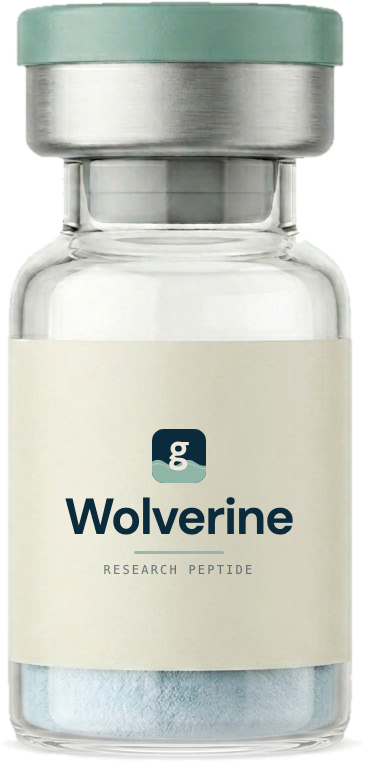
Wolverine
Wolverine is a research-compound blend of BPC-157 and TB-500 studied preclinically for soft-tissue, tendon, ligament, joint, and systemic repair; research protocols typically start near 250 mcg of each daily subcutaneously, building toward 1 mg each (up to 2 mg each).
Best for
It has been studied, primarily in preclinical and animal models, for soft-tissue, tendon, ligament, muscle, and joint repair as well as broader systemic recovery and tissue-regeneration research.
What to expect
Research and anecdotal reports describe variable timelines, with some soft-tissue recovery effects noted over roughly one to several weeks of use, though rigorous human onset data are lacking.
Pairs with
Beyond its own BPC-157 and TB-500 components, it is commonly stacked in recovery-focused regimens with growth-hormone secretagogues such as CJC-1295 and ipamorelin.
In research settings the two peptides are typically administered by subcutaneous injection, with BPC-157 protocols often dosed daily and TB-500 protocols often dosed once or a few times weekly, frequently during an initial loading window followed by a reduced maintenance frequency.
- How often
- Daily
- Route
- Subcutaneous
- Vial & water
- 10 mg (5 each) in 2 mL · 250 mcg each = 10 units on a U-100 syringe
- Cycle
- Run in 6–8 week recovery blocks, then a break.
The same numbers the goodtides app and the Dose Calc use — a research reference, not a prescription. Responses are individual; research protocols start at the low end.
Wolverine is a research-compound blend pairing two synthetic peptides: BPC-157, a stable pentadecapeptide (15 amino acids) derived from a partial sequence of human gastric juice protein BPC, and TB-500, a synthetic fragment corresponding to the actin-binding region of thymosin beta-4, a naturally occurring 43-amino-acid regulatory peptide.
In preclinical models BPC-157 has been characterized as acting largely at the injury site, where research describes upregulation of the growth hormone receptor in tendon fibroblasts, interaction with the nitric-oxide system, and promotion of angiogenesis via VEGF-related signaling. TB-500 is studied as a systemic actor that sequesters G-actin to support cell migration, endothelial cell movement, and new blood-vessel formation.
The two are commonly combined on the rationale that their angiogenic and anti-inflammatory effects may be complementary. Neither component is FDA-approved; both are handled as research compounds, and most evidence to date comes from animal and in-vitro studies rather than controlled human trials.
References4
- Sikiric P et al. Stable gastric pentadecapeptide BPC 157: novel therapy in gastrointestinal tract (Curr Pharm Des)
- Chang CH et al. The promoting effect of pentadecapeptide BPC 157 on tendon healing involves tendon outgrowth, cell survival, and cell migration (J Appl Physiol) (rat model)
- Goldstein AL et al. Thymosin beta4: actin-sequestering protein moonlights to repair injured tissues (Trends Mol Med)
- Bock-Marquette I et al. Thymosin beta4 activates integrin-linked kinase and promotes cardiac cell migration, survival and cardiac repair (Nature) (mouse model)
Log every dose, count every vial, and verify your batches — free in the goodtides app.
This page is educational reference material about compounds studied in research settings. It is not medical advice, and nothing here is a recommendation to buy, possess, or use any compound. Research findings described are from published literature; individual compounds may not be approved for human use. Talk to a licensed clinician about anything that affects your health.